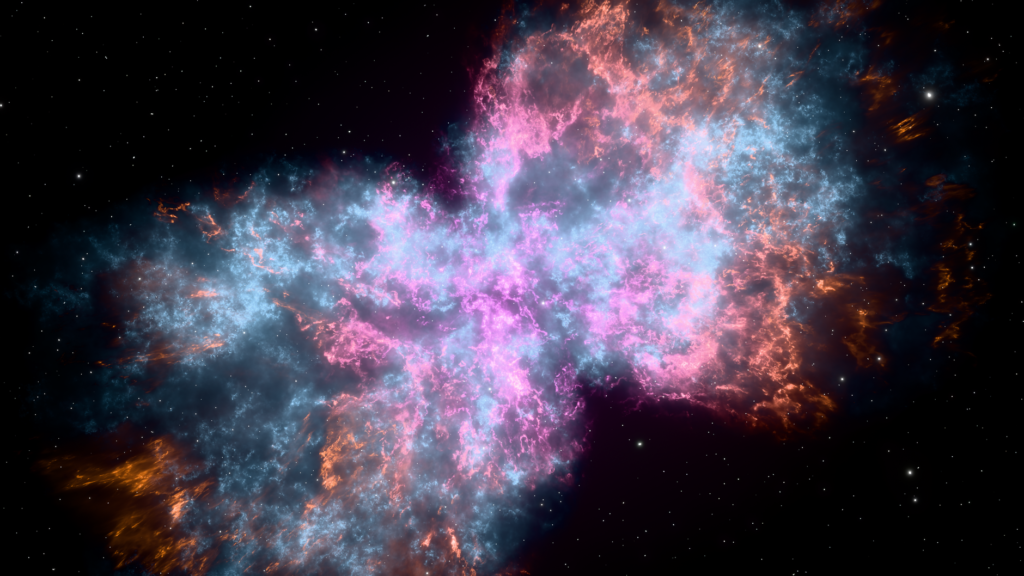
Type Ia supernova discoveries have been significantly advanced by the collaboration of Gemini and DECam. This young supernova showcases remarkable features that enhance our understanding of these cosmic events.
What is a Type Ia Supernova?
A Type Ia supernova is a powerful astronomical event resulting from the thermonuclear explosion of a white dwarf star. This type of supernova occurs in binary systems where a white dwarf accretes matter from a companion star, leading to an increase in mass. When the white dwarf reaches a critical mass, known as the Chandrasekhar limit, it triggers a runaway nuclear fusion reaction, causing it to explode.
The significance of Type Ia supernovae lies in their consistent peak luminosity, making them vital tools for measuring cosmic distances. Because they explode with a similar brightness, astronomers can use them as standard candles to understand the expansion of the universe. This characteristic has made Type Ia supernovae crucial for discovering dark energy and studying the universe’s structure.
In recent observations, the Gemini Observatory and the Dark Energy Camera (DECam) have helped to provide a clearer view of young Type Ia supernovae, enhancing our understanding of their formation and evolution. These discoveries not only deepen our knowledge of stellar life cycles but also contribute to ongoing research into the fate of the universe.
The Role of Gemini in Astronomy
The Gemini Observatory plays a pivotal role in advancing our understanding of the cosmos, particularly through its contributions to the study of Type Ia supernovae. This facility, equipped with cutting-edge technology, allows astronomers to capture high-resolution images and gather extensive data on these explosive cosmic events.
One of the key advantages of the Gemini Observatory is its ability to observe the Universe in multiple wavelengths. This capability enables scientists to gain insights into the composition and behavior of celestial objects, including the remnants of Type Ia supernovae. By analyzing the light emitted from these explosions, researchers can infer crucial details about the underlying mechanisms driving these phenomena.
Furthermore, Gemini’s collaborative efforts with the Dark Energy Camera (DECam) have proven invaluable. The combination of DECam’s wide-field imaging and Gemini’s precise observations allows for a comprehensive analysis of Type Ia supernovae and their role in the expansion of the Universe. As a result, the findings from these joint efforts not only enhance our understanding of supernovae but also contribute to broader questions regarding dark energy and cosmic evolution.
How DECam Contributes to Discoveries
The Dark Energy Camera (DECam) plays a pivotal role in the study and discovery of astronomical phenomena, particularly Type Ia supernovae. This state-of-the-art instrument, mounted on the Blanco Telescope in Chile, provides unparalleled imaging capabilities that allow astronomers to capture high-resolution images of distant galaxies and their explosive events.
One of DECam’s significant contributions is its wide field of view, which enables the efficient scanning of large portions of the sky. This wide field capability is essential when searching for transient events like Type Ia supernovae, which can occur unexpectedly. By covering vast areas, DECam helps identify these supernovae shortly after they explode, allowing for timely observations.
Additionally, DECam’s sensitivity to different wavelengths of light enhances the understanding of the physical processes behind these cosmic explosions. Its ability to detect faint light emissions from supernovae aids researchers in gathering crucial data about their brightness and distance, key factors in measuring cosmic expansion.
Through collaborations with observatories like Gemini, DECam continues to advance our knowledge of Type Ia supernovae, unraveling the mysteries of the universe and contributing to our understanding of dark energy.
Recent Findings on Young Supernovae
Recent observations have shed new light on young Type Ia supernovae, revealing their critical role in understanding cosmic evolution. These stellar explosions occur when a white dwarf star accumulates enough mass from a companion star, leading to a cataclysmic event that can outshine entire galaxies.
In a groundbreaking discovery, researchers utilizing the Gemini Observatory and the Dark Energy Camera (DECam) captured images of a young Type Ia supernova shortly after its explosion. This timely observation allowed scientists to analyze the supernova’s early light curve and spectral features, providing insight into the explosion mechanism and its progenitor star system.
Key findings from this research include:
- Rapid Brightening: The supernova exhibited a swift increase in brightness, suggesting new insights into the explosion dynamics.
- Element Composition: Spectral analysis revealed the presence of specific elements, which are crucial for understanding nucleosynthesis processes.
- Distance Measurement: This event has helped refine distance measurements to its host galaxy, improving our understanding of the universe’s expansion rate.
The collaboration between Gemini and DECam exemplifies the power of modern astronomy in unraveling the mysteries of Type Ia supernovae and their significance in the cosmic landscape.
Implications for Cosmic Research
The discovery of a young Type Ia supernova has significant implications for cosmic research, particularly in our understanding of the expansion of the universe. These stellar explosions serve as vital indicators for measuring astronomical distances, which helps refine models of cosmic growth and evolution.
One of the primary implications is the challenge they pose to existing theories about dark energy. As Type Ia supernovae are used to calculate the rate of expansion, discrepancies between observations and predictions may lead to new insights into the nature of this mysterious force that drives the universe apart.
Additionally, studying young Type Ia supernovae can unveil critical details about their progenitor systems, allowing astronomers to investigate the conditions leading up to these powerful explosions. This understanding can enhance our knowledge of stellar evolution and the lifecycle of galaxies.
Furthermore, the collaboration between Gemini and DECam underscores the importance of advanced observational techniques in capturing transient events in the universe. As techniques improve, it will be possible to discover and analyze more Type Ia supernovae, providing a clearer picture of their role in the cosmic landscape.
Ultimately, these discoveries pave the way for future research that could reshape our understanding of fundamental questions in astrophysics.
Future Observations and Studies
Future observations and studies of Type Ia supernovae are crucial for expanding our understanding of these cosmic events and their implications for the universe. Ongoing collaborations between observatories like Gemini and the Dark Energy Camera (DECam) will play a significant role in this research. Upcoming projects aim to enhance the precision of distance measurements to Type Ia supernovae, thereby refining our knowledge of cosmic expansion.
Key objectives for future studies include:
- Monitoring Variability: Regular observations will help scientists track the light curves of Type Ia supernovae to identify patterns and anomalies.
- Spectroscopic Analysis: Detailed spectroscopy will provide insights into the chemical composition and explosion mechanisms of these supernovae.
- Investigating Host Galaxies: Understanding the environments in which Type Ia supernovae occur can reveal the conditions that lead to their formation.
- Collaboration with Other Telescopes: Coordinated efforts with space-based telescopes will enhance the data quality and broaden the scope of observations.
These studies will not only enhance our knowledge of Type Ia supernovae but also contribute significantly to cosmic research, including dark energy investigations.
The recent observations of the Type Ia supernova have provided astronomers with unprecedented insights into the cosmic phenomena. By utilizing advanced techniques, researchers are able to analyze the light curves of the Type Ia supernova in greater detail than ever before.
Photo by Nicola Narracci on Pexels
References
Related stories