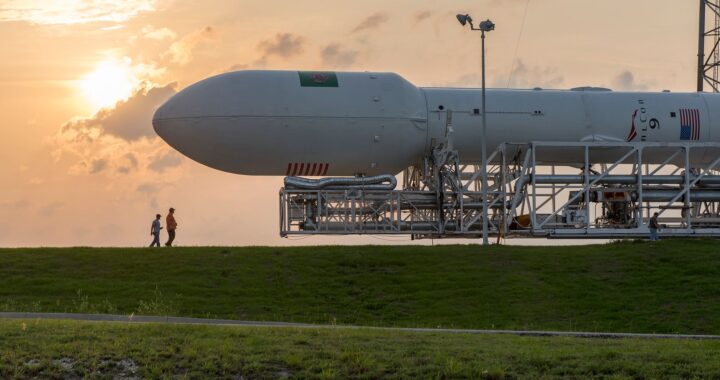
The Swift satellite telescope has experienced a dramatic fall from orbit, marking a significant moment in space exploration. This incident highlights the challenges faced by aging space technology.
Overview of the Swift satellite mission
The Swift satellite telescope, launched in 2004, has been a groundbreaking tool in the field of astrophysics. Designed to observe gamma-ray bursts, it has provided vital data for understanding the universe’s most energetic events. Throughout its mission, the Swift satellite telescope has captured thousands of astronomical phenomena, contributing significantly to our knowledge of cosmic explosions and the formation of galaxies.
Over the years, the mission has been marked by several notable achievements, including:
- Real-time observations: Swift was the first satellite capable of rapidly responding to gamma-ray bursts, allowing astronomers to study these events while they were still occurring.
- Multi-wavelength data: The telescope has provided data across various wavelengths, enhancing our understanding of the afterglow of explosive events.
- Collaborative efforts: Swift has worked in tandem with numerous observatories around the globe, fostering international collaboration in the scientific community.
Despite its remarkable contributions, the Swift satellite telescope has recently reached the end of its operational life, culminating in its worst fall from orbit in history.
What led to the telescope’s fall?
The recent fall of the Swift satellite telescope marks a significant event in space exploration history. Several factors contributed to this unprecedented situation.
- Aging technology: Launched in 2004, the Swift satellite telescope had surpassed its expected operational lifespan, leading to a decline in performance and reliability.
- Orbital decay: Over time, atmospheric drag caused the telescope’s orbit to gradually decay, pushing it closer to Earth.
- Loss of communication: In its final months, the satellite experienced intermittent communication failures, complicating efforts to monitor its health and trajectory.
- Space debris: The increasing amount of space debris in low Earth orbit posed a risk to the satellite, potentially destabilizing its path.
- Budget constraints: Funding limitations restricted necessary updates and maintenance, leaving the telescope vulnerable as it neared the end of its operational life.
These combined factors ultimately led to the Swift satellite telescope’s fiery descent, highlighting the challenges of maintaining aging space technology in a rapidly evolving environment.
Impact on future space missions
The recent demise of the Swift satellite telescope marks a significant turning point for future space missions. As agencies analyze the implications of this unprecedented event, several key areas of concern have emerged.
- Technological Advancements: The failure of the Swift satellite telescope underscores the need for more robust technology in space exploration. Future missions may prioritize enhanced materials and designs to withstand the rigors of prolonged orbital operations.
- Mission Planning: This incident will likely lead to more rigorous mission planning and risk assessment protocols. Agencies may adopt stricter guidelines for satellite lifespan and end-of-life scenarios to avoid similar outcomes.
- International Collaboration: The fall of the Swift satellite telescope has reignited discussions on the importance of global cooperation in space missions. Shared resources and knowledge can help mitigate risks associated with satellite operations.
- Public Perception: The dramatic fall has raised awareness about space debris and its potential dangers. Educating the public on these issues may increase support for future missions aimed at monitoring and managing space environments.
As the space community reflects on this event, the lessons learned will undoubtedly shape the trajectory of upcoming missions and technologies.
Public reaction to the incident
The recent fall of the Swift satellite telescope has sparked significant public reaction across various platforms. Many space enthusiasts and scientists expressed their sorrow over the demise of a mission that has contributed immensely to our understanding of the universe.
Social media platforms have been flooded with tributes, including:
- “Farewell to the Swift satellite telescope, a beacon of discovery!”
- “It’s heartbreaking to see such an important piece of technology come to an end.”
- “What will happen to the data collected by the Swift satellite telescope?”
Some experts have pointed out the potential implications for future missions. A leading astrophysicist commented, “The fall of the Swift satellite telescope raises questions about the longevity and safety of aging satellites in orbit.” As discussions continue, many hope that lessons learned from this incident will pave the way for improved designs and protocols in future space explorations.
Overall, the incident has resonated deeply with the public, highlighting the connection people feel toward scientific endeavors and their outcomes.
Lessons learned from the Swift telescope’s end
The demise of the Swift satellite telescope has provided critical insights into the challenges of maintaining long-term space missions. As engineers and scientists analyze the events leading to its catastrophic fall from orbit, several key lessons have emerged.
- Importance of Regular Assessments: Continuous monitoring of satellite health and performance is essential. Regular assessments can help identify potential issues before they escalate into catastrophic failures.
- Advancements in Technology: Investing in newer technologies and materials can enhance the durability and lifespan of satellites. The Swift satellite telescope, while groundbreaking in its time, faced limitations due to the aging technology.
- Emergency Protocols: Developing robust emergency protocols for deorbiting aging satellites can mitigate risks associated with uncontrolled descents. Learning from the Swift telescope’s fall can inform better practices for future missions.
- International Collaboration: Sharing information and strategies among space agencies can enhance overall safety. Collaborative efforts could lead to improved guidelines for satellite operations and end-of-life procedures.
By applying these lessons, future space missions can strive for greater efficacy and safety, ensuring that incidents like the Swift satellite telescope’s fall are less likely to occur.
By NASA Goddard Photo and Video via Openverse
References
Related reading